- The Snowball Effect
- Posts
- The psychology behind your lost deals
The psychology behind your lost deals
The brain science behind why small tweaks close $50k contracts

Michael Lovegrove
February 22, 2026
In partnership with

Hey
Last week I posted something on LinkedIn about the lines that were killing my sales calls.
It hit a nerve.
My inbox lit up. DMs, comments, replies… people saying things like "I literally said three of these on a call yesterday…”
So I wanted to go deeper with you.
Because swapping one line for another is useful, but understanding why it works is what makes it stick.
Every word you say on a call triggers something in the buyer's brain. Not logically. but emotionally. Before they even know it's happening.
And when you get the psychology wrong, you lose the deal before you've finished your pitch.
10 years ago, I was getting this completely wrong. Pitching straight away. Walking through every feature. Asking "does that make sense?" not realising the damage it was doing.
And nobody was buying.
Not because my product was bad. Because I was completely underestimating how human psychology works - how it impacts sales.
Below are the 8 tweaks you should make and the reasons why:
Speak fuller prompts. Get better answers.
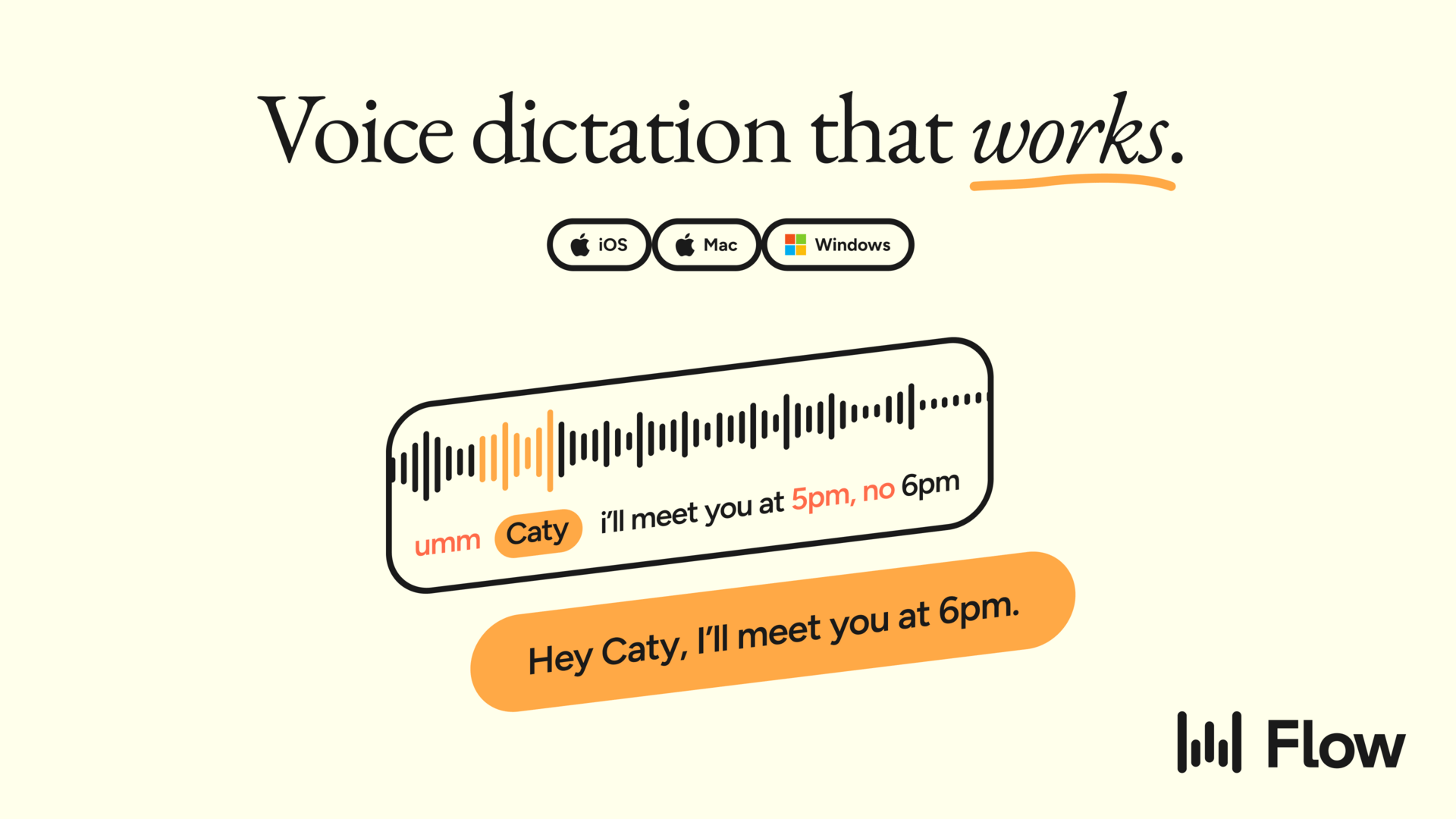
Stop losing nuance when you type prompts. Wispr Flow captures your spoken reasoning, removes filler, and formats it into a clear prompt that keeps examples, constraints, and tone intact. Drop that prompt into your AI tool and get fewer follow-up prompts and cleaner results. Works across your apps on Mac, Windows, and iPhone. Try Wispr Flow for AI to upgrade your inputs and save time.
1. "Thanks for taking the time" → "I'm glad we could meet today"
This is about status framing. The moment you thank someone for their time, you position yourself below them. Their brain registers: "this person needs me more than I need them."
That's a problem. Because people buy from equals. Not from people who feel lucky to be in the room.
"I'm glad we could meet" puts you on the same level. It signals confidence without arrogance. And confidence is one of the strongest trust signals in human communication.
2. "I believe our solution could really help you" → "Companies come to us typically struggling with X, Y, Z. How does that compare to what you're seeing?"
This one is about pattern recognition. When you say "I believe," you're asking the buyer to trust your opinion. They don't. They just met you.
But when you describe the problems of people like them — accurately — their brain does something powerful. It thinks: "This person understands my world."
That's called diagnostic authority. It's the same reason you trust a doctor who describes your symptoms before you tell them. They've already proven they know what's wrong.
And the question at the end? That triggers self-diagnosis. The buyer starts connecting their own pain to your words. Now they're selling themselves.
3. "Let me show you how it works" → "Let me show you why this matters for your business"
Your buyer's brain doesn't care about features. It cares about survival, status, and outcomes.
"How it works" activates the analytical brain. It puts them in evaluation mode. They start looking for reasons it won't work.
"Why this matters for your business" activates the emotional brain. It connects your solution to their goals, their problems, their future. And neuroscience is clear on this — decisions are made emotionally first, then justified logically.
Lead with the "why it matters." The "how it works" can come later.
4. "Does that make sense?" → "How would this change your day to day?"
"Does that make sense?" is one of the most damaging questions in sales. It puts the burden on the buyer. Nobody wants to say "no, it doesn't." So they nod along, confused, and then ghost you later.
The replacement does something completely different. It triggers what psychologists call "mental simulation." You're asking the buyer to imagine a future where they have your solution.
And when someone pictures themselves using your product — living with it — they become emotionally invested. They've already started owning it in their mind.
That's the psychology behind test drives. Car salespeople know that once you sit in the seat and grip the wheel, you've already half-bought it.
5. "What's your budget?" → "What would solving this problem be worth to you?"
Budget questions anchor the conversation to a number. Usually a low one. Because the buyer's instinct is to protect themselves.
"What would solving this be worth?" reframes the entire conversation around the GAP — the distance between where they are and where they want to be. This is the core of GAP Selling.
If the problem costs them $1M a year, your $50k solution isn't expensive. It's a bargain. But they only see that when you help them quantify the pain first.
6. "It's too expensive? Let me get you a discount" → "I'm confused. You said this is costing you £1M a year. Is this not a priority?"
Discounting is the fastest way to destroy trust. The buyer's brain immediately thinks: "If they can drop the price that easily, it was never worth what they quoted."
The alternative reframes around the cost of inaction. It forces the buyer to confront their own words. They told you the problem was costing them a fortune. Now they're hesitating on the solution.
This creates cognitive dissonance — a gap between what they said and what they're doing. And the brain hates dissonance. It wants to resolve it. Most often, it resolves it by moving forward.
7. "So, what would you like to do next?" → "Here's what I suggest we do next…"
Asking the buyer what to do next is like a pilot turning to the passengers and asking "so, where should we land?"
Nobody wants that.
Buyers are dealing with complexity. They have 14 other priorities, three stakeholders to manage, and a boss asking questions. The last thing they want is another decision.
When you tell them the next step, you reduce cognitive load. You make it easy. And the brain always gravitates toward the path of least resistance.
It also signals something deeper: "I've done this before. I know the way. Follow me." That's leadership. And people buy from leaders.
8. "Just checking in…" → "I've been thinking about the problem you mentioned — I had an idea I wanted to run past you"
"Just checking in" is the sales equivalent of "hey" on a dating app. It signals nothing. Adds nothing. And it tells the buyer you have nothing valuable to say.
The alternative triggers the reciprocity principle. You've spent time thinking about their problem. You've brought them something useful. The brain feels a pull to respond — because someone gave first.
It also maintains the diagnostic frame. You're not chasing. You're helping. And that is the difference between a salesperson people avoid and an advisor people return calls to.
So there you go!
It’s more than word swaps.
We’re triggering different areas of the brain.
Each one changes the dynamic between you and the buyer. From performer to partner. From pitcher to advisor. From someone who needs the deal to someone who leads the conversation.
I spent 10 years learning this the hard way. But, after understanding these principles (plus others) I have been able to help my clients make over $30m in ARR.
And the foundation of the system is all about knowing what's happening in the buyer's brain before they even know it themselves.
When you then layer on top the right AI tooling, your sales function becomes really powerful.
Which is what you will learn how to build when you join Snowballn’.
A system + A community for founders and sales teams who want to close more, chase less, and actually enjoy the sales process.
Right now there's an early member offer open at www.snowballn.com.
Go check it out. See if it fits.
Power to you,
Mike

Wait, you’re a human?!
Reply